





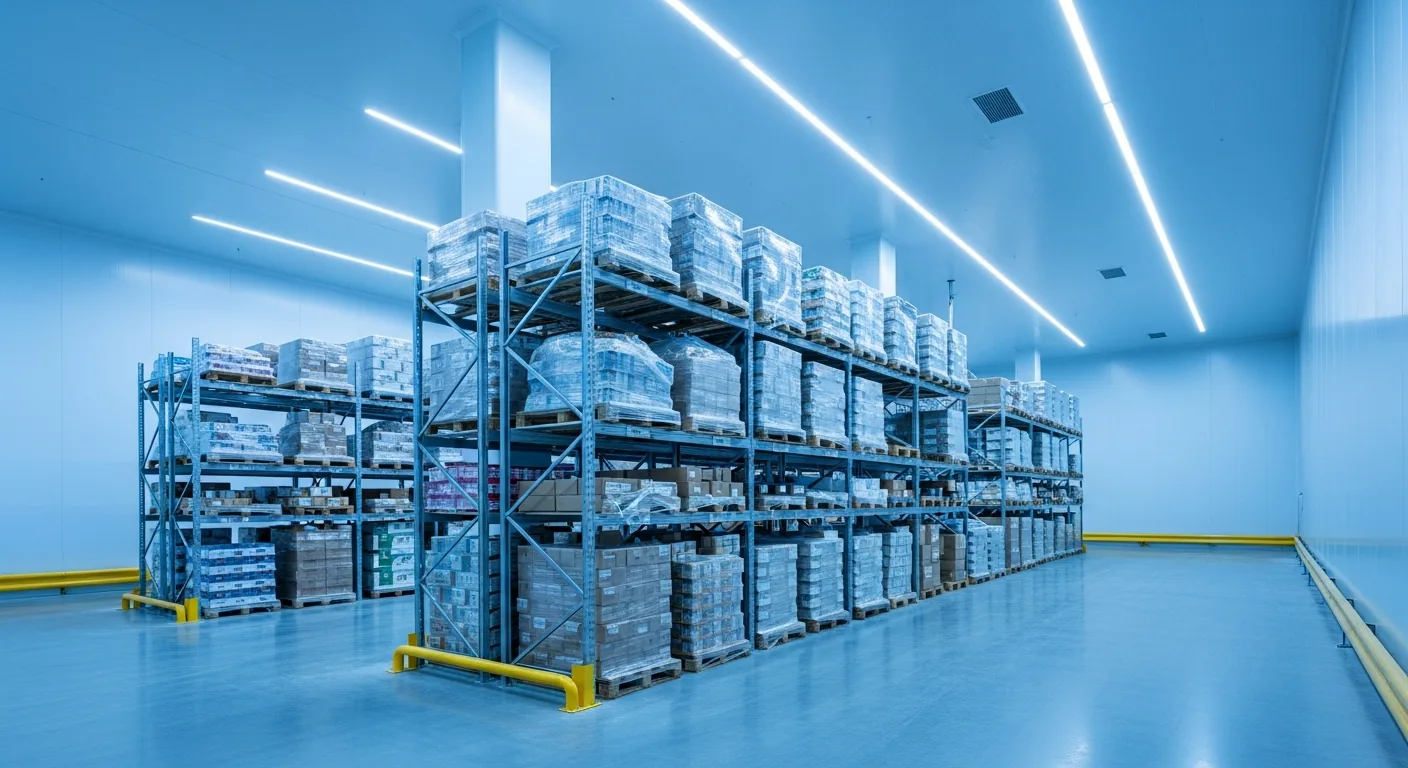
In cold storage, condensation control and hygiene decide product safety and energy costs. How ISORYX Dry & Cool solves both with a thin coating.
Cold storage facilities and deep-freeze warehouses face extreme physical challenges: high temperature differences between internal and external areas often lead to condensation on walls and ceilings. The consequences are severe – from mould growth and hygiene issues to dangerous ice build-up on surfaces and creeping moisture saturation of the insulation.
The Physical Challenge: When Cold Meets Humidity
In refrigeration technology, moisture is the greatest enemy of efficiency. As soon as warm, humid air enters a cooled room (e.g., through loading processes or personnel traffic), its temperature drops abruptly. If the air temperature at a surface falls below the dew point, condensation occurs. In deep-freeze areas, this water freezes immediately into ice.
This leads to a cascade of problems: slippery floors due to dripping and freezing water, corrosion on metal elements, destruction of sandwich panels by ice expansion, and – most critically – the loss of insulating effect. Wet insulation material conducts heat instead of stopping it.
The physical solution for refrigeration technology
ISORYX Dry & Cool was specifically developed for these environments. The coating utilizes Reflection-Barrier-Technology to actively manage infrared heat radiation. Instead of merely blocking the cold, the reflective surface ensures that the wall surface temperature is stabilized. This prevents humid air from condensing at the dew point – the walls stay dry.
Application Areas in Industrial Cooling
The applications for ISORYX Dry & Cool are diverse and cover the entire cold chain:
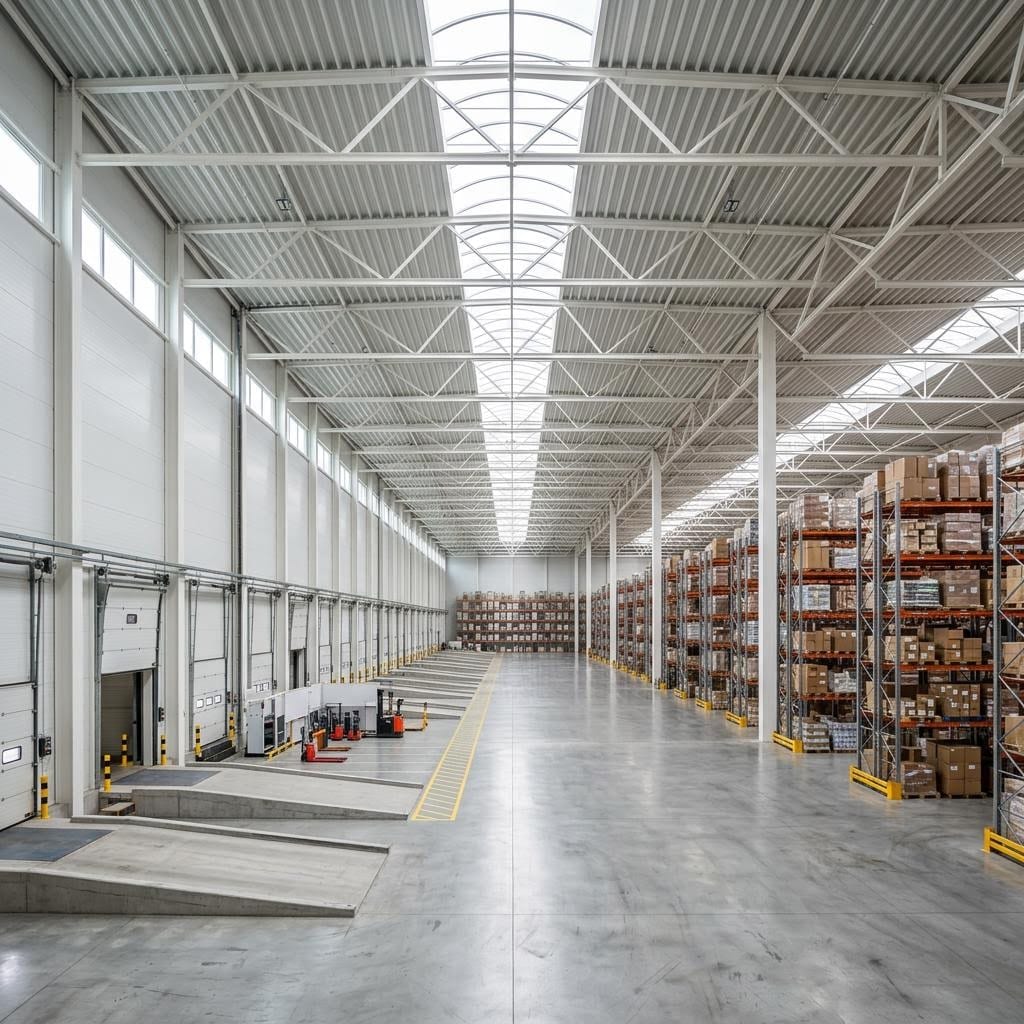
- Loading docks and airlocks: Where warm outside air meets cold interior zones.
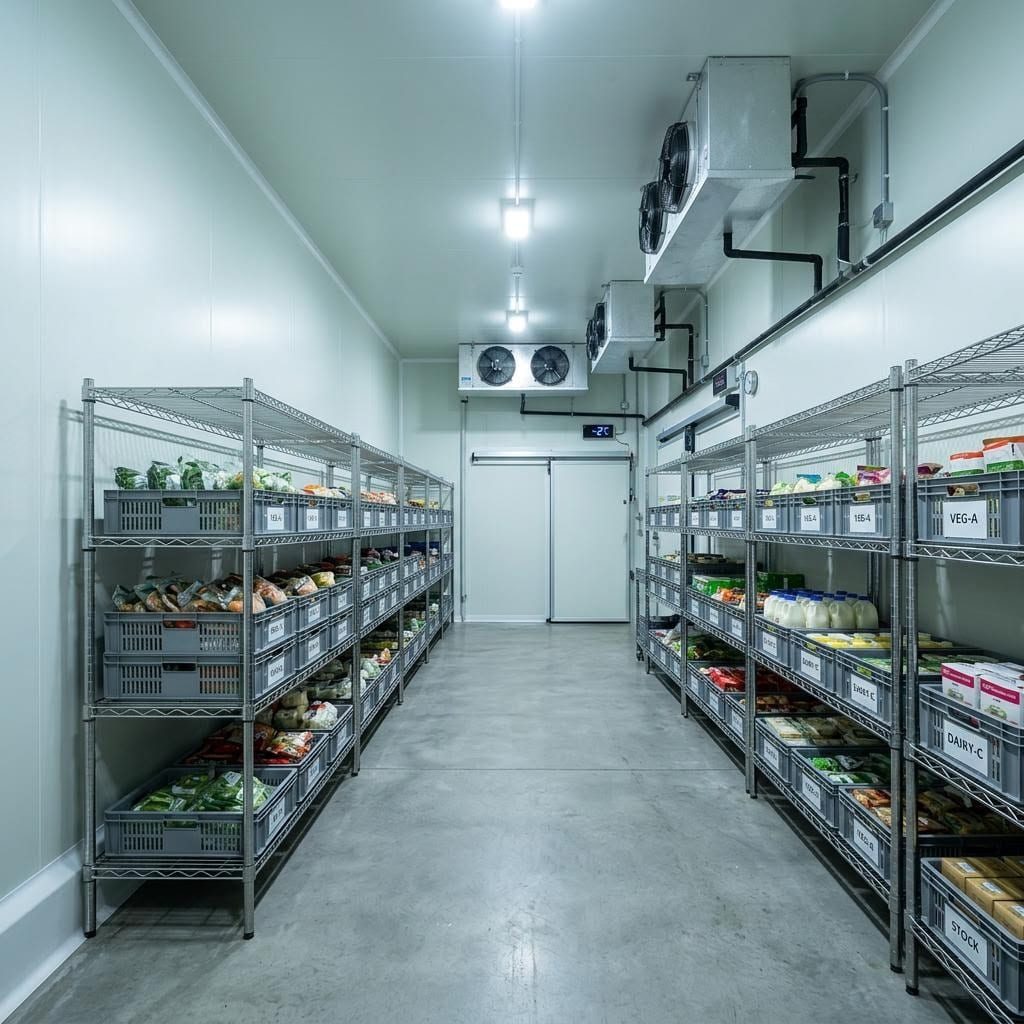
- Blast freezers and deep-freeze cells: Prevention of extreme ice build-up on walls.
- Ripening rooms (e.g., for fruit or cheese): Control of surface moisture at high humidity.
- Pharma and vaccine storage: Highest hygienic safety and stable temperature control.
- Supermarket cold aisles: Reduction of condensate on rear walls.
Comparison: ISORYX vs. Conventional Renovation
| Feature | Conventional (Panel Replacement) | ISORYX Dry & Cool |
|---|---|---|
| Costs | Very high (material + installation) | Low (coating only) |
| Downtime | Days to weeks (operation stop) | Minimal (possible during operation) |
| Sustainability | Production of new waste | Value preservation of existing fabric |
| Added Benefit | No IR reflection | Active heat flow reduction |
| Hygiene | Joints as dirt traps | Seamless, antimicrobial surface |
Your benefits at a glance
The economic benefits go beyond pure energy costs. By eliminating defrost cycles for surfaces and reducing cleaning intervals, operating costs drop significantly.
No operational downtime
A decisive economic factor: ISORYX Dry & Cool can often be applied without a complete shutdown of the cooling system. Fast drying and easy application allow for an efficient retrofit of existing facilities. In many cases, a moderate temperature increase to approx. +5°C is sufficient for the application phase, after which it can be cooled down again immediately.
Hygiene standards and product safety
In food and pharmaceutical logistics, mould or bacteria are absolute deal-breakers. The mineral composition of ISORYX provides natural protection. Since the coating is vapour-open, moisture is not trapped but controlled and dissipated.
In a modern cold storage facility, the wall coating is not a decorative element, but a functional component of the refrigeration technology.— ISORYX Technical Team
Conclusion: Long-term Protection for Your Cold Chain
ISORYX Dry & Cool is more than just a coat of paint. It is a physical tool for optimizing cooling processes. By tackling the problem at its root – condensation on cold surfaces – it ensures safety, hygiene, and drastically reduced costs.
Frequently asked questions
Can ISORYX Dry & Cool be applied at sub-zero temperatures?
For optimal results, the surface temperature should be above freezing during application (ideally +5°C). However, thanks to its fast-drying properties, the temperature can be lowered again shortly after application, minimizing downtime.
How exactly does the coating save energy in cold storage?
Through two effects: First, the Reflection-Barrier-Technology reflects incoming IR light and reduces heat influx. Second, it prevents moisture from penetrating the insulation. Dry insulation works significantly better than damp insulation, meaning the cooling unit runs less frequently.
Is the coating suitable for food areas (HACCP)?
Yes, ISORYX is low-emission (VOC class A+) and is naturally antimicrobial due to its mineral base (tested according to ISO 22196). It supports compliance with HACCP standards by preventing condensation and mould.
What happens if the existing panel surface is damaged?
ISORYX can seal small cracks and porous areas. For major damage to sandwich panels, prior repair should be carried out. The coating then acts as an additional protective layer against further corrosion and moisture ingress.
Can the coating be cleaned?
Yes, the dried coating is wipeable and resistant to common cleaning methods used in cold storage. Thanks to its smooth, seamless structure, it offers less surface for dirt to accumulate than panel joints.
How long does the protective effect last?
The physical properties of the Reflection-Barrier-Technology are not subject to chemical degradation. With a mechanically intact surface, the protective effect against condensate and the IR reflection remains stable for many years (10+).
Does ISORYX also help against ice build-up on ceiling evaporators?
ISORYX reduces overall humidity through drier walls, which can indirectly slow down the icing of the units. The coating itself is primarily applied to structural surfaces (walls, ceilings), not to the fins of the refrigeration equipment.
Is a primer necessary on metal panels?
Yes, for optimal adhesion on smooth metal surfaces (sandwich panels), we recommend ISORYX Primario. This ensures a permanent bond between the substrate and the functional coating.