

An external thermal insulation composite system is considered standard – yet often never pays for itself within its lifetime. We compare ETICS and ISORYX using real project figures.
When it comes to energy-efficient renovation, property owners often face a difficult choice: should the building be wrapped in a classic external thermal insulation composite system (ETICS/WDVS), or are there more efficient ways? While ETICS massively changes the façade and causes high costs, ISORYX offers a technological alternative that relies on reflection instead of absorption.
Direct Comparison: ETICS vs. ISORYX
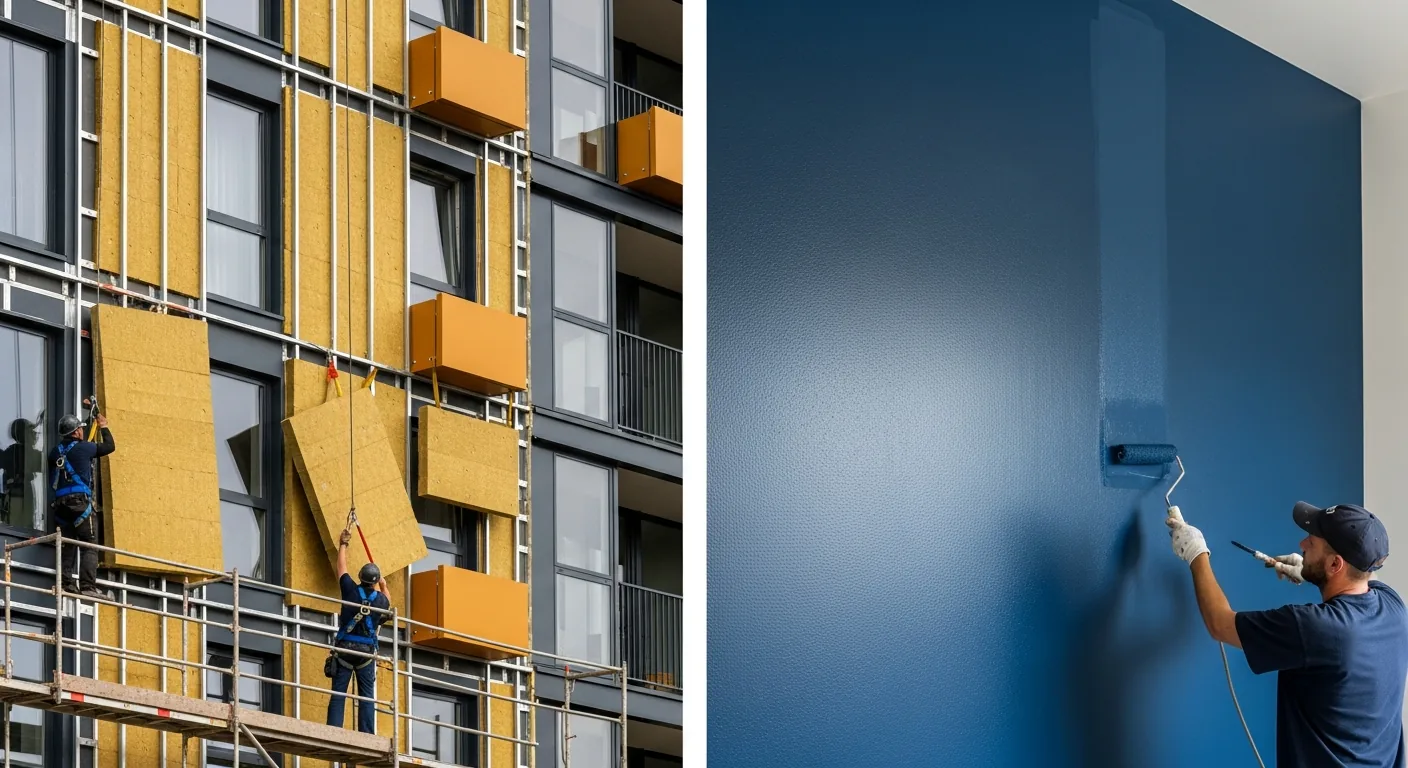
A classic ETICS system is based on reducing heat conduction through thick insulating layers (polystyrene, mineral wool). While this has been the standard for decades, it brings significant disadvantages: from fire hazards to algae growth on the façade and extremely long payback periods. ISORYX, on the other hand, uses Reflection-Barrier-Technology to reflect over 90% of infrared radiation. The result is a warm wall surface with minimal coating thickness, without the physical building risks of thick external insulation.
| Criterion | Classic ETICS | ISORYX Inside/Outside |
|---|---|---|
| Investment (approx.) | from 120 € / m² | from 35 € / m² |
| Thickness | 120 - 200 mm | 0.5 - 1.0 mm |
| Installation time | Weeks | Days |
| Scaffolding required | Yes (mandatory) | Only for exterior use |
| Payback period | 15–25 years | 3–7 years |
| Lifespan | 20–25 years | 30+ years |
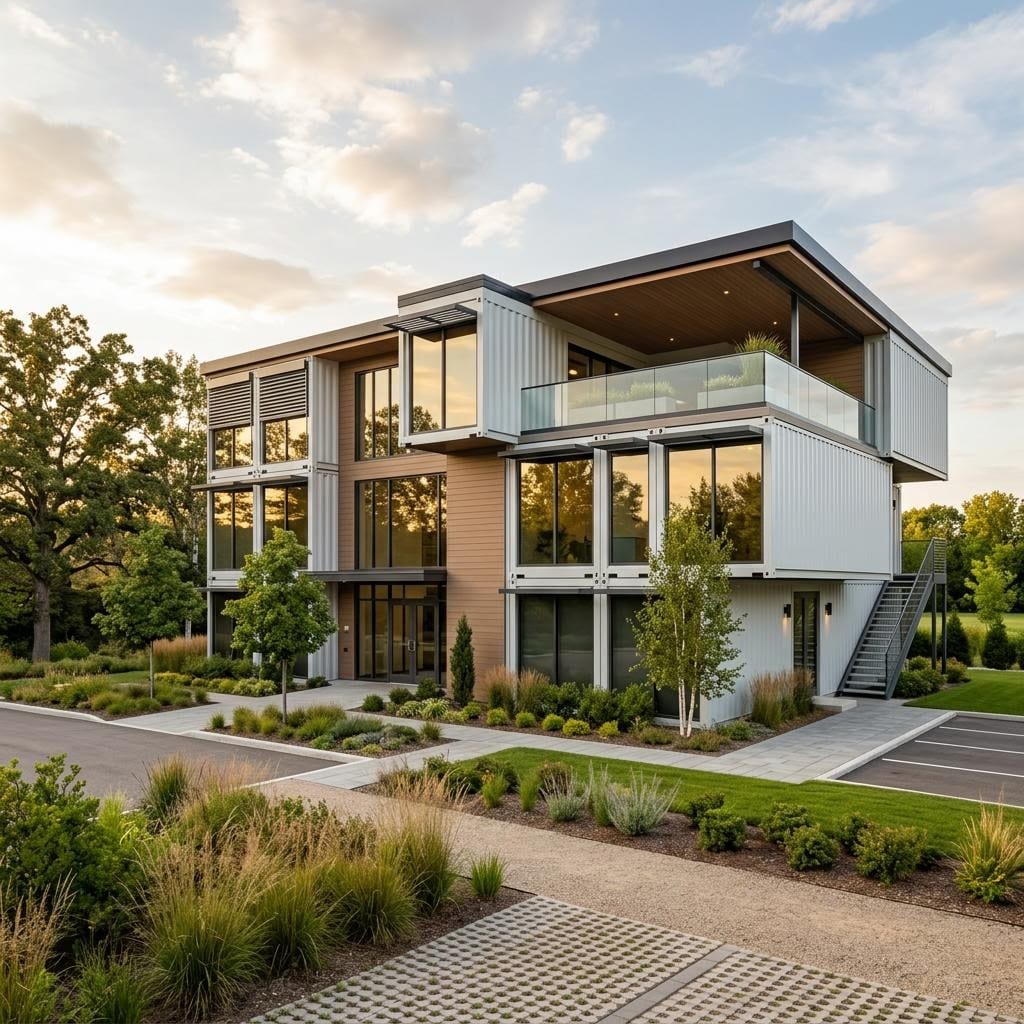
| Façade appearance | Massive change | Remains preserved |
| Disruption | Construction site for weeks | Minimal (like painting) |
| Mould risk | Increased if poorly executed | Minimal (physically excluded) |
Economic Efficiency and Payback
The biggest hurdle for conventional insulation is the price. An ETICS system often only pays for itself through energy savings after 20 years – exactly when the first renovations to the insulation itself become due. In many cases, ETICS systems reach the end of their lifespan before they have recouped their investment costs. This often makes them economically questionable.
ISORYX significantly reduces heating costs at a fraction of the investment cost. Since no scaffolding, no adjustments to roof overhangs, and no new window sills are required, almost 100% of the investment flows directly into energy improvement. In practice, we often see payback in as little as 5 years, making ISORYX one of the most profitable renovation measures on the market.
Building Physics: Reflection vs. Delay
ETICS tries to keep the heat in the house by delaying its passage through the wall. The problem: the wall behind the ETICS cools down extremely in winter because it can no longer store solar heat. As soon as the heating is switched off, the room cools down immediately. In addition, the lack of breathability often leads to moisture problems in the masonry.
ISORYX Reflection-Barrier ensures that the inside of the wall reflects the heat immediately. The wall remains dry and warm, which not only increases comfort but also physically shifts the dew point so that condensation and thus mould growth have no chance. ISORYX is completely vapour-open, protecting the building fabric in the long term.
Sustainability and Disposal
ETICS systems (especially EPS/polystyrene) are extremely energy-intensive to manufacture and are based on petroleum. At the end of their life cycle, they are expensive hazardous waste that can hardly be recycled. Removing an ETICS system is an ecological and financial burden for the next generation.
ISORYX is a mineral coating that is extremely durable. It protects the masonry for decades without sealing it. No hazardous waste is produced, and the CO₂ balance over the entire life cycle is unbeatable due to the minimal amount of material and long durability.
When ISORYX is the only solution
- Listed buildings: Where the façade appearance must not be changed.
- Boundary construction: When there is no space for thick external insulation towards the neighbouring property.
- Targeted mould prevention: To permanently eliminate cold corners in problem flats.
- Rental properties: When an energy upgrade is to take place without lengthy construction sites and scaffolding.
- Interior spaces: Where every centimetre of living space counts and thick insulation boards would reduce the room size.
- Budget-limited projects: Where maximum energy savings per euro invested must be achieved.
Insulation must pay off. A system that only generates profits after two decades is not an economic decision, but a bet on the future.
Frequently asked questions
Why is ISORYX so much cheaper than ETICS?
The main advantage lies in the elimination of high labour and ancillary costs: no scaffolding, no disposal of old materials, no adjustment of roof overhangs or window sills, and extremely fast application compared to the multi-week ETICS installation.
Can ISORYX physically replace 16 cm thick insulation?
Physically, both systems work differently: while ETICS massively reduces heat conduction (U-value), ISORYX prevents energy loss at the surface through reflection. In terms of overall energy balance and economic efficiency, ISORYX is often superior because it works faster and physically excludes mould.
Is ISORYX also eligible for energy renovation subsidies?
Yes, in many cases the costs can be claimed for tax purposes as part of an energy-efficient renovation or maintenance measure, or funded through CO₂ reduction programmes. Please discuss this with your energy consultant.
Does the building lose breathability through ISORYX?
No, on the contrary. ISORYX is completely vapour-open. While many ETICS systems seal the façade like a plastic bag, ISORYX allows the wall to exchange moisture, which preserves the building fabric and improves the indoor climate.
How long does the ISORYX coating last compared to ETICS?
ETICS façades often tend to crack or develop algae after 15–20 years and require expensive renovation. ISORYX is a mineral, durable coating with a lifespan of 30+ years that is low-maintenance and retains its reflective properties permanently.
Can ISORYX also help with mould problems where ETICS fails?
Yes. Although ETICS increases the U-value, it often cannot completely eliminate thermal bridges at balconies or window lintels. ISORYX ensures an evenly warm wall surface through reflection and prevents condensation at its root – ideal for renovating problem areas.
Is ISORYX suitable for listed buildings?
Absolutely. Since the coating thickness is minimal and the façade structure is preserved, ISORYX is often the only approvable solution for energy-efficient renovations in buildings with heritage protection requirements.
Is there a warranty on the system?
We offer a 10-year system warranty on the ISORYX Reflection-Barrier when applied professionally. However, the actual durability of the mineral components is significantly higher.