



Conventional mould control often fails because it ignores the root cause: cold walls and condensation. We analyze the failure of chlorine and fungicides and show the solution.
Anyone who has dealt with mould in a bathroom or an old building knows the vicious cycle: you buy the most expensive mould remover, scrub away the black spots, paint over it with 'anti-mould paint' – and after the next heating season, it's all back. The frustration is great, but from a building physics perspective, this result is absolutely predictable. Conventional methods only fight the symptom, while leaving the physical root cause completely untouched.
The Truth About Conventional Mould Removers
Why do hardware store remedies fail so regularly? Let's look at the most common methods and their fatal weaknesses in detail:
Chlorine Sprays (Active Chlorine): Aggressive but Short-Sighted
Chlorine-based mould removers are the 'chemical club'. They bleach the black stain immediately, fooling the user into thinking it's a quick cure. But the effect is superficial: while chlorine kills the spores directly on the surface, it doesn't reach the deeper mycelium (the root network) in the plaster. As soon as the chlorine has evaporated – often accompanied by a pungent smell and health risks to the respiratory tract – the fungus simply grows back out of the wall.
Home Remedies like Vinegar and Alcohol
Alcohol (ethanol) or hydrogen peroxide have a brief disinfecting effect but evaporate extremely quickly and leave no lasting protection. Vinegar is even counterproductive on mineral substrates (lime or cement plaster): the acid reacts with the alkaline plaster, neutralizing its natural protective effect, and the organic substances it contains can even serve as additional food for the mould in the worst case.
Anti-Mould Paints: Borrowed Time
These paints usually contain biocides or fungicides. The problem: these active ingredients are water-soluble. Since the physical problem (the damp wall) remains, the toxins 'wash out' or decompose over time. After usually only 6 to 24 months, the protective effect has evaporated, while the wall remains cold and damp. The mould returns – often more resistant than before.
Why Mould is Physically Inevitable (Until Now)
Mould is not an accident, but a result of thermodynamics. It forms wherever warm, humid indoor air meets a cold wall surface. If the surface temperature drops below the dew point, water condenses.
In a typical bedroom with 20 °C air temperature, the dew point is approx. 12.6 °C (at 60 % humidity). An uninsulated exterior corner in an old building easily cools to below 10 °C during frost. The result: the wall becomes wet, even if it's not raining. This is the birth of mould.
| Method | How it Works | Long-Term Effect | ISORYX Inside |
|---|---|---|---|
| Chlorine Sprays | Bleaching & Disinfection | Fails after weeks (mycelium remains) | Addresses root cause |
| Fungicide Paints | Chemical Toxic Barrier | Loss of effect through washout | Physical action |
| Home Remedies (Vinegar) | Acid Shock | Can even nourish mould | Alkaline & Protective |
| Shock Ventilation | Removal of Humidity | Only with perfect behavior | User-independent |
| ISORYX Inside | Heat Reflection | Permanent (10 yr warranty) | Physical Solution |
The ISORYX Solution: Defeating the Dew Point
ISORYX Inside breaks this cycle through Reflection-Barrier-Technology. Instead of poisoning the fungus, we change the physical conditions at the wall surface:
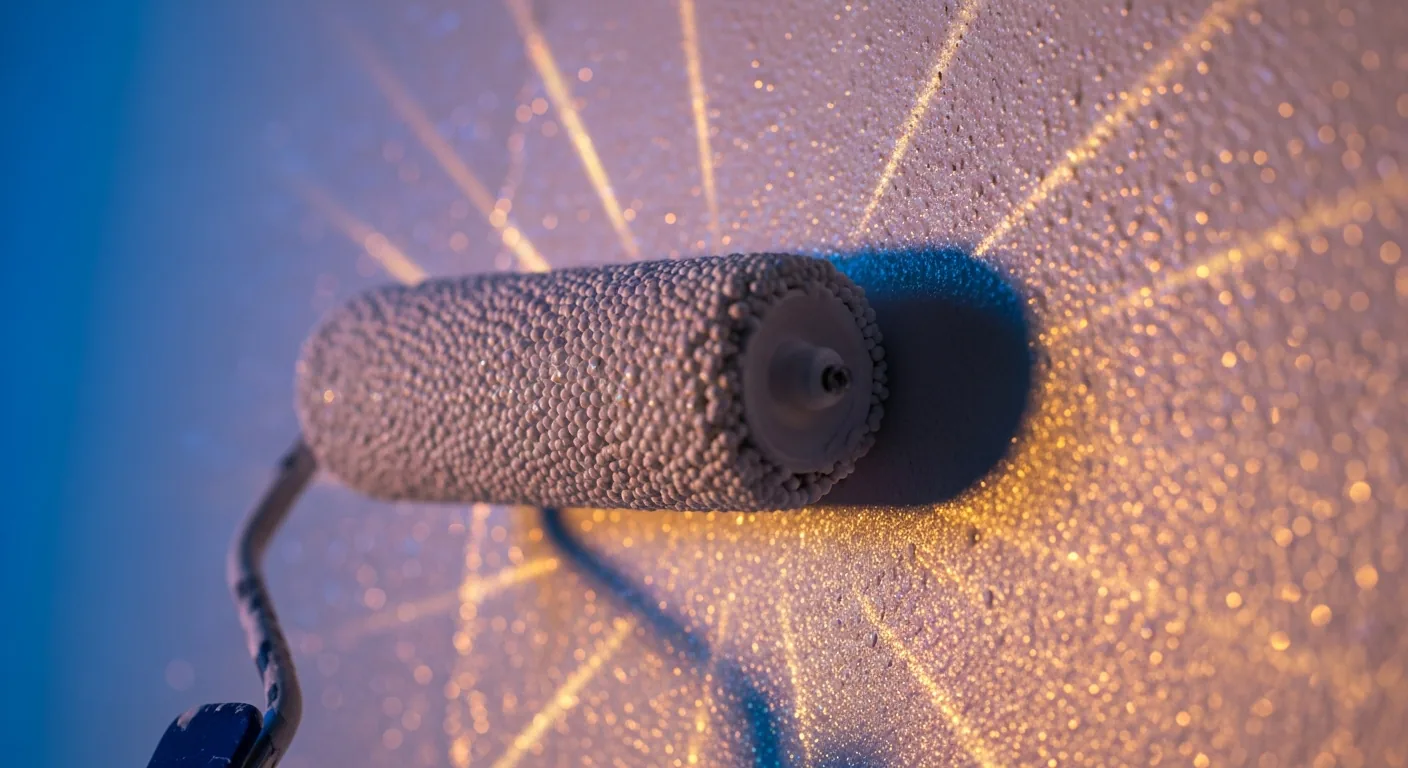
- Heat Reflection: Over 90 % of infrared radiation is reflected. The wall temperature rises significantly.
- Dew Point Shift: Due to the warmer surface, the dew point is no longer reached. The wall stays dry.
- Vapour Openness: Moisture is not locked in, but can be regulated through the coating.
- Alkalinity & ISO 22196: The mineral structure provides natural protection against microorganisms, without any leachable toxins.
If you keep the wall warm, you take away the mould's foundation for life. It's a solution based on physics, not chemistry.— ISORYX Building Physics Experts
Frequently asked questions
Why does mould in the bathroom keep coming back despite using chlorine cleaners?
Chlorine only kills surface spores and bleaches the stain. The physical cause – the cold wall surface and resulting condensation – remains. Once the chlorine has evaporated, the fungus grows back from the deeper mycelium. ISORYX prevents condensation permanently through heat reflection.
Do anti-mould paints help against mould infestation in the long term?
Usually not. These paints are based on biocides that are washed out or lose their effect over time. Since the wall under the paint remains cold, moisture continues to condense. ISORYX relies on a physical principle (heat) that is not 'consumed'.
Can vinegar permanently remove mould on the wall?
No, vinegar can even cause damage on mineral plaster. The acid neutralizes the alkaline protection of the plaster, and the organic components of the vinegar can serve as food for the mould. An alkaline, warm surface like with ISORYX is the better choice.
Is proper ventilation enough to prevent mould in old buildings?
Ventilation is important but reaches physical limits if the exterior wall is too cold (thermal bridges). Even with low humidity, the dew point can be undercut in ice-cold spots. ISORYX ensures that the wall temperature remains high enough.
Why does mould often occur in the corner behind the wardrobe?
There is hardly any air circulation there, and the wall is insulated from the room heat by the wardrobe. The wall surface cools down massively and moisture condenses. ISORYX reflects heat directly to the wall surface and keeps it dry.
Is ISORYX Inside harmless to health?
Yes, unlike many mould removers and anti-mould paints, ISORYX is water-based, VOC-free (A+), and contains no outgassing toxins. The effect is purely physical and mineral.
How long does the protection against mould with ISORYX last?
Since the effect is based on the physical reflection of heat and the surface is mineral-stable, there is no degradation of active ingredients. We provide a 10-year manufacturer warranty on the protective effect.
Can you paint over ISORYX?
To maintain full reflection performance, ISORYX should be the final layer. However, it can be tinted with special, also vapour-open pigments. A thick coat of normal paint would reduce the reflection.